

| 📌 | Definition: Cordyceps is an adaptogenic mushroom used in traditional Chinese medicine to support the body against fatigue and oxidative stress. |
| 🔬 | Composition: Contains cordycepin, adenosine, and polysaccharides, the main active molecules responsible for ergogenic effects. |
| ⚡ | Key Mechanism: Enhances ATP production at the mitochondrial level and optimizes muscle oxygen utilization. |
| 📊 | Performance: Clinical studies show an improvement in VO2 max (+7%) and ventilatory threshold after 3 weeks of supplementation. |
| 💊 | Dosage: 1 to 4 g per day depending on the athletic profile, with a minimum duration of 3 to 6 weeks to observe effects. |
| ⏱️ | Timing: Optimal intake 30 to 60 minutes before training or in the morning on an empty stomach for daily use. |
| ⚠️ | Precautions: Contraindicated during pregnancy, in cases of autoimmune diseases or drug interactions. |
Cordyceps and sports performance: complete guide on dosage, timing, and precautions before training
Cordyceps is gradually establishing itself as an essential natural supplement in the arsenal of athletes seeking to optimize their endurance and recovery. Used for centuries in traditional Chinese medicine, this adaptogenic mushroom is now attracting increasing scientific attention, notably for its ability to stimulate ATP production and improve VO2 max. This cordyceps sports performance dosage timing precautions analysis aims to separate fact from fiction, relying on recent clinical data and validated protocols to support you in an informed and safe use.
What are the real effects of cordyceps on sports performance?
Cordyceps significantly improves endurance and cellular energy production thanks to its bioactive compounds. Clinical studies demonstrate an increase in VO2 max and better resistance to effort after several weeks of regular supplementation.
Origin and bioactive composition of the mushroom
Native to the high Himalayan plateaus, cordyceps sinensis naturally grows at very high altitudes in the Himalayas, notably in Tibet, Nepal, Bhutan, and the Chinese provinces of Qinghai, Sichuan, and Yunnan. This wild variety, historically harvested by local populations, has become extremely rare and expensive. In response to this shortage, cordyceps militaris has emerged as a laboratory-cultivated alternative, more accessible and often more concentrated in cordycepin than its wild counterpart.
The bioactive richness of cordyceps relies on several key molecules. Cordycepin, a nucleoside analogue of adenosine, plays a central role in improving oxygen utilization by muscle cells. Polysaccharides and beta-glucans contribute to immune modulation and cellular protection against oxidative stress. The mushroom also contains vitamins B1, B2, B12, E, K, essential minerals (copper, iron, magnesium, selenium, zinc, manganese), and amino acids indispensable for energy metabolism.
Cordyceps was popularized in sports during the 1993 Olympic Games by the Chinese national athletics team, which broke several world records, marking a turning point in the international recognition of this adaptogenic mushroom.
Energy action mechanisms and endurance improvement
The fundamental mechanism of cordyceps is based on its ability to optimize energy production at the mitochondrial level. By stimulating ATP synthesis, the main molecule for energy storage and transfer in cells, the mushroom allows muscles to sustain effort longer before fatigue sets in. At the same time, cordycepin improves oxygen utilization by muscle cells, directly contributing to an increase in VO2 max, a key indicator of aerobic capacity.
Rigorous clinical studies have precisely measured these effects. A 2022 study showed that after 3 weeks of cordyceps militaris supplementation, participants exhibited a significant improvement in VO2 max (+7%) and ventilatory threshold. Another study demonstrated that after 6 weeks of supplementation, cyclists measurably improved their endurance. These results place cordyceps among the most scientifically documented natural ergogenic aids.
What cordyceps dosage to adopt according to your athletic profile?
The dosage of cordyceps varies between 1 and 4 g per day depending on the athletic goal and training intensity. A minimum duration of 3 to 6 weeks is necessary to observe significant effects on performance and muscle recovery.
General dosages and optimal duration of use
Cordyceps supplementation does not produce immediate effects. It is an adaptogen whose benefits accumulate progressively. The recommended supplementation duration to observe effects is generally 3 to 6 weeks, with some protocols extending up to 12 weeks for endurance goals. The recommended dosage varies according to athletic objectives, with scientifically validated protocols to optimize results.
For standard daily use, experts recommend between 1,000 and 3,000 mg of standardized extract per day. When the whole mushroom powder is used, dosages generally range between 3 and 6 g daily. Study protocols use a dose of 4 g per day of a mushroom blend containing cordyceps militaris to evaluate sports performance during intense efforts.
Adjustments according to type of activity and intensity
Cordyceps supplementation is particularly suitable for endurance athletes and people suffering from chronic fatigue. However, needs vary considerably depending on the discipline practiced and level of commitment:
- Endurance sports (running, cycling, triathlon): Dosage of 2 to 3 g per day, with an emphasis on pre-workout intake to maximize muscle oxygenation and delay fatigue onset.
- Intermittent sports (football, rugby, basketball): 1.5 to 2.5 g per day, favoring regular daily intake to support recovery between sessions and maintain stable energy levels.
- Strength and power sports: 1 to 2 g per day, with cordyceps playing a role more focused on recovery and reducing post-exercise inflammatory markers than on direct performance.
- Occasional practitioners and stress management: 1 g per day in the morning, sufficient to benefit from the adaptogenic and antioxidant properties of the mushroom.
Cordyceps acts on energy metabolism by modulating the use of energy substrates and impacting mitochondria. This systemic action explains why the benefits are felt on several levels: endurance, recovery, immunity, and resistance to oxidative stress.
What is the best time to take cordyceps before training?
The ideal timing for taking cordyceps is 30 to 60 minutes before training to maximize immediate performance benefits. A daily morning intake is also recommended for long-term adaptogenic effects.
Pre-exercise intake: why 30 to 60 minutes before?
The 30 to 60 minute window before exertion corresponds to the time needed for the active compounds of cordyceps to be absorbed and begin to act on energy metabolism. Cordycepin and polysaccharides require this delay to reach an optimal plasma concentration and effectively stimulate mitochondrial ATP production. Taking the supplement too early reduces the availability of the molecules at the critical moment of exertion, while taking it too late does not allow sufficient absorption.
Administration forms also influence absorption kinetics. Fast-release capsules and powders diluted in a liquid offer more immediate bioavailability than extended-release tablets. For pre-workout use, prefer liquid forms or standard capsules taken with a glass of water, possibly accompanied by a light source of carbohydrates to facilitate assimilation.
Regular daily intake and usage cycles
Apart from the occasional pre-workout intake, cordyceps is traditionally taken in the morning or early afternoon to support energy and alertness throughout the day. The ideal timing for taking cordyceps can be daily or pre-workout to maximize benefits according to the athlete’s goals.
The advantages of morning intake lie in synchronization with the natural circadian rhythm of cortisol, a hormone that peaks upon waking. Cordyceps enhances this natural energy effect without causing excessive stimulation or disrupting nighttime sleep. For usage cycles, it is recommended to follow periods of 6 to 8 weeks followed by a 1 to 2 week break, allowing the body to maintain its sensitivity to the active compounds and to assess progress made.
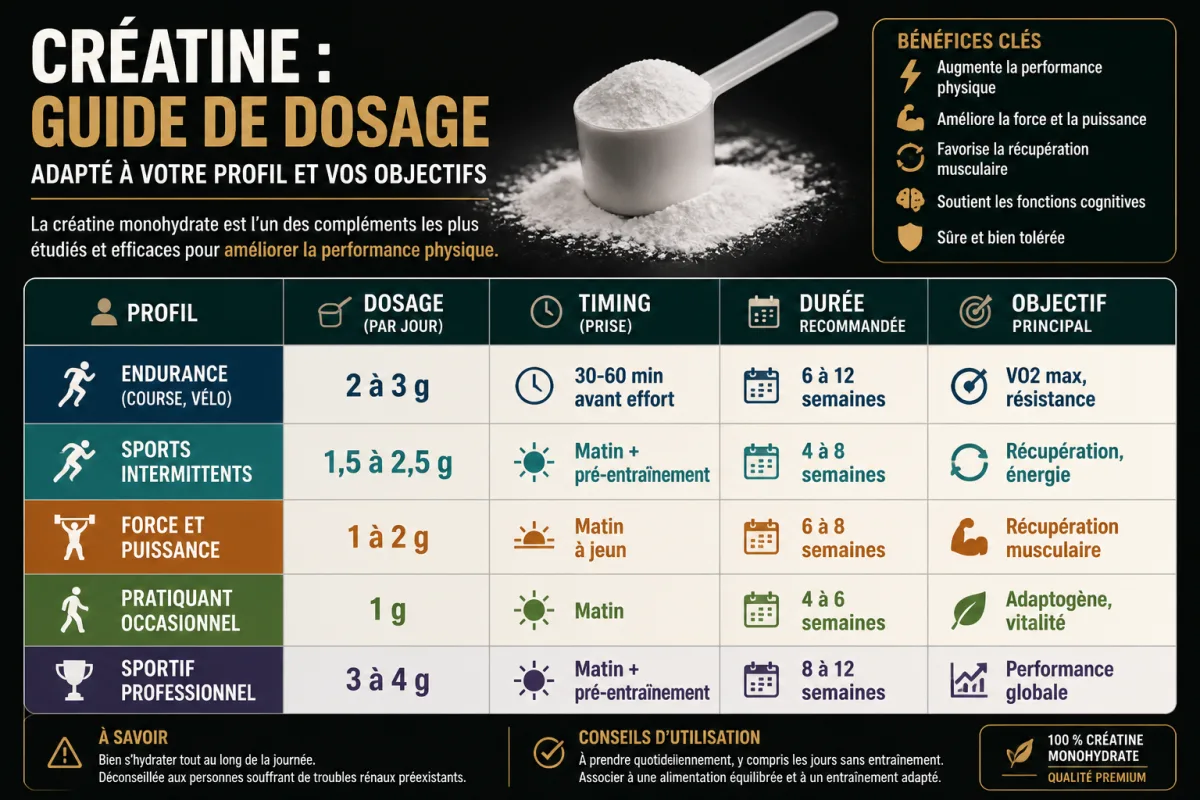
| Sport profile | Daily dosage | Optimal timing | Recommended duration | Main goal |
|---|---|---|---|---|
| Endurance (running, cycling) | 2 to 3 g | 30-60 min before exertion | 6 to 12 weeks | VO2 max, endurance |
| Intermittent sports | 1.5 to 2.5 g | Morning + pre-workout | 4 to 8 weeks | Recovery, energy |
| Strength and power | 1 to 2 g | Morning on an empty stomach | 6 to 8 weeks | Muscle recovery |
| Occasional practitioner | 1 g | Morning | 4 to 6 weeks | Adaptogen, vitality |
| Professional athlete | 3 to 4 g | Morning + pre-workout | 8 to 12 weeks | Overall performance |
What precautions should be taken before consuming cordyceps?
Cordyceps can have drug interactions and contraindications, hence the need to respect the dosage and take precautions before any supplementation. A medical consultation is recommended for people under treatment or with particular health conditions.
Main contraindications and at-risk populations
Cordyceps is not a trivial supplement and presents formal contraindications for certain populations. Pregnancy and breastfeeding are situations where supplementation is not recommended due to insufficient data on fetal and infant safety. People with autoimmune diseases must also exercise caution, as the immunomodulatory properties of the mushroom could exacerbate symptoms by excessively stimulating the immune system.
Allergies to mushrooms represent another obvious contraindication. Although rare, allergic reactions to cordyceps can manifest as skin rashes, breathing difficulties, or digestive disorders. Children and adolescents, whose metabolism and endocrine system are still developing, should not consume cordyceps without specialized medical advice.
Possible side effects and their management
Side effects of cordyceps are generally rare and mild when consumed at recommended doses. Some users report mild digestive issues (nausea, diarrhea, abdominal discomfort) during the first days of supplementation, which disappear spontaneously as the body adapts. Headaches or a dry mouth sensation have also been reported, often linked to insufficient hydration or an initially too high dosage.
To minimize these effects, it is advised to start with a low dose (500 mg to 1 g) and gradually increase over one to two weeks. Taking the supplement during or after a meal can also reduce digestive discomfort. If symptoms persist beyond a few days, supplementation should be discontinued and a healthcare professional consulted.
Interactions with medications and other supplements
Cordyceps can interact with several classes of medications, requiring particular caution. Anticoagulants and antiplatelet agents constitute the main risk category: the blood-thinning properties of the mushroom could potentiate the effect of these medications, increasing the risk of bleeding. Immunosuppressants, prescribed notably after a transplant or in the treatment of autoimmune diseases, may have their efficacy potentially reduced by the immunostimulant action of cordyceps.
Regarding interactions with other dietary supplements, some synergies are interesting while other combinations warrant caution. Cordyceps can be safely combined with most vitamins and minerals, as well as with other adaptogens such as rhodiola or ashwagandha. Conversely, combining it with strong stimulants (high doses of caffeine, ephedra) may cause excessive stimulation of the nervous system. It is recommended to space the intake of cordyceps and medications by at least 2 to 3 hours to limit interaction risks.
Cordyceps can help recovery by reducing post-exercise inflammatory markers and protecting against exercise-induced muscle damage, making it a valuable ally for intensive athletes.
How to choose a quality cordyceps supplement?
The cordyceps market offers various forms ranging from raw powder to standardized extracts, with major differences in concentration, bioavailability, and reliability. Choosing a quality product relies on several objective criteria to avoid counterfeits and ineffective supplements.
Standardized extracts versus raw powder
Standardized extracts represent the most reliable form for sports use. They guarantee a precise concentration of active ingredients, notably cordycepin and adenosine, usually expressed as a percentage on the label (for example, extract standardized to 0.3% cordycepin). This standardization allows precise and reproducible dosing, essential for following structured training protocols. Raw mushroom powder, although more natural, shows significant variability in composition depending on batches, cultivation soil, and drying conditions.
Cordyceps is available as standardized dietary supplements with recommended quality labels and certifications. Prefer products certified organic, from controlled cultures in Europe or North America, and accompanied by independent laboratory analyses verifying the absence of contaminants (heavy metals, pesticides, mycotoxins).
Labels, certifications, and traceability criteria
Several indicators help distinguish a quality product from a dubious supplement. The exact botanical name (Cordyceps militaris or Cordyceps sinensis) is mandatory and must appear clearly on the packaging. GMP (Good Manufacturing Practices) certifications, published third-party analyses, and transparency about the cultivation location are signs of reliability. Be wary of products with abnormally low prices, often synonymous with colored rice powder or blends diluted with fillers without biological activity.
The comparison between cordyceps sinensis and militaris deserves particular attention. Wild sinensis, although traditionally more prestigious, is extremely rare, expensive, and often subject to counterfeiting. Cultivated militaris, besides being more accessible, often has a higher concentration of cordycepin thanks to optimized bioreactor cultivation conditions. For regular sports use, standardized militaris offers the best balance of efficacy, reliability, and price.
What possible synergies exist between cordyceps and other natural ergogenic aids?
Cordyceps can be combined with several natural supplements to enhance its effects on performance and recovery. However, these combinations must be considered carefully to avoid overdosing and undesirable interactions.
Scientifically validated combinations
Caffeine is the most obvious partner for cordyceps. While the mushroom optimizes mitochondrial energy production and muscle oxygenation, caffeine acts on the central nervous system to reduce perceived exertion and increase alertness. Together, they offer a complementary synergy without the risk of excessive overstimulation, provided moderate dosages are respected (less than 200 mg of caffeine per intake).
Beta-alanine, known for buffering muscle acidity and delaying fatigue during intense efforts, effectively complements the action of cordyceps on aerobic endurance. Beetroot juice, rich in natural nitrates, improves vasodilation and oxygen supply to muscles, thereby enhancing the benefits of cordyceps on VO2 max. These combinations are particularly relevant for endurance athletes seeking to optimize every aspect of their energy metabolism.
Precautions when combining
Not all combinations are recommended. Combining cordyceps with powerful stimulants or aggressive thermogenics can overload the nervous system, resulting in irritability, palpitations, or sleep disturbances. It is also not advisable to combine cordyceps with other strong immunostimulants (high doses of echinacea, astragalus) over long periods, so as not to disrupt the natural immune response.
To gradually introduce these synergies, start with cordyceps alone for 2 to 3 weeks to assess your individual tolerance. Then add one supplement at a time, spacing introductions by at least one week. This method allows clear identification of the source of any side effects and adjustment of dosages accordingly.
Key takeaways
🔬 Cordyceps stimulates mitochondrial ATP production and improves VO2 max in a clinically measurable way.
💊 The optimal dosage ranges from 1 to 4 g per day depending on the athletic profile and training intensity.
⏱️ Take cordyceps 30 to 60 minutes before exercise or in the morning for daily adaptogenic effects.
⚠️ Respect contraindications and consult a doctor if you are on anticoagulant or immunosuppressive treatment.
🌿 Prefer cultivated and standardized cordyceps militaris for guaranteed traceability and efficacy.
FAQ
How long does it take to feel the effects of cordyceps?
The first effects on energy and vitality can appear as early as the first week, but significant improvements in VO2 max and endurance generally require 3 to 6 weeks of regular supplementation. The duration varies depending on dosage, product quality, and individual metabolism.

Can cordyceps be taken every day without a break?
It is recommended to follow cycles of 6 to 8 weeks followed by a break of 1 to 2 weeks. This approach helps maintain the body’s sensitivity to active compounds and assess progress without tolerance buildup.
Is cordyceps allowed in sports competition?
Yes, cordyceps is not listed among prohibited substances by the World Anti-Doping Agency (WADA). It can therefore be freely used by amateur and professional athletes, provided that certified contaminant-free products are chosen.
What are the differences between cordyceps sinensis and militaris?
Sinensis is a rare and expensive wild variety growing at high altitude in the Himalayas. Militaris is lab-cultivated, more accessible, often more concentrated in cordycepin, and offers superior traceability. For sports use, standardized militaris is generally preferred.
Does cordyceps have long-term side effects?
Available studies do not report serious side effects related to prolonged use at recommended doses. However, data on consumption beyond 12 months remain limited. Medical supervision and regular breaks are advised for use beyond 6 months.
