

| 📌 | Definition: Adaptogens are plants and fungi that help the body resist physical and psychological stressors without disrupting its normal functioning. |
| 🧬 | Mechanism: They act on the hypothalamic-pituitary-adrenal (HPA) axis to regulate the production of cortisol, the stress hormone. |
| 🌿 | Rhodiola rosea: An adaptogen from cold regions, known to improve stress resistance, mental endurance, and concentration. |
| ⚡ | Ginseng (Panax ginseng): A tonic used in traditional Chinese medicine, combats chronic fatigue and strengthens immunity. |
| 🍄 | Functional mushrooms: Reishi, cordyceps, chaga, and others contain mycopolysaccharides with immunomodulatory properties. |
| ☕ | Mushroom coffees: Trendy products whose clinical efficacy has not yet been proven by robust studies. |
| 🎯 | Informed choice: The choice of an adaptogen depends on the type of fatigue, individual metabolism, and timing of intake. |
Sommaire
Comparison of rhodiola, ginseng, and functional mushrooms against stress: what science reveals
Chronic stress has become a major public health issue, leading an increasing number of people to turn to natural adaptogens. These plants and fungi, used for millennia in traditional medicines, offer a complementary approach to regulating the stress response without the side effects of conventional drugs. But with the diversity of products available, how can one navigate? This comparison of rhodiola, ginseng, and functional mushrooms against stress analyzes the mechanisms of action, scientific evidence, and practical uses of three major adaptogen families to help you make an informed and personalized choice.
What is a natural adaptogen?
A natural adaptogen is a plant or fungal substance that helps the body resist physical, chemical, and biological stressors without disrupting its normal functioning. The term “adaptogen” was coined in 1947 by Russian toxicologist Nikolai Lazarev to designate these plants capable of increasing the nonspecific resistance of the body against external aggressions.
To be qualified as an adaptogen, a compound must meet three fundamental criteria: be non-toxic at usual doses, produce a nonspecific stress response, and exert a normalizing effect on physiological functions. Unlike classic stimulants that exhaust energy reserves, adaptogens work in synergy with the body’s natural regulatory mechanisms.
Adaptogens do not mask stress symptoms: they help the body develop lasting resistance by regulating hormonal and metabolic pathways involved in the stress response.
The most studied natural adaptogens include rhodiola rosea, Asian ginseng (Panax ginseng), ashwagandha (Withania somnifera), as well as several medicinal mushrooms such as reishi and cordyceps. Each has a distinct action profile, making the choice of an adaptogen dependent on the type of fatigue and individual metabolism.
How do adaptogens act against stress?
Adaptogenic plants primarily act on the hypothalamic-pituitary-adrenal (HPA) axis, the neuroendocrine system that regulates cortisol production, the stress hormone. In chronic stress situations, this axis becomes overactive and leads to excessive cortisol secretion, causing fatigue, sleep disorders, weakened immunity, and cognitive difficulties.
Adaptogens intervene at several levels to restore balance:
- Cortisol modulation: They help normalize cortisol levels, thereby reducing anxiety and chronic stress while improving sleep quality.
- Immune strengthening: They support the immune system often weakened by prolonged stress, increasing energy, mental clarity, and concentration.
- Cellular protection: Many adaptogens possess antioxidant properties that protect cells against oxidative stress related to cortisol.
- Neurotransmitter regulation: Some adaptogens influence serotonin and dopamine levels, improving mood and mental resilience.
It is important to note that the effects of adaptogens are not immediate. Most clinical studies show significant results after 4 to 8 weeks of regular use. Their action is progressive and cumulative, which distinguishes them from stimulating solutions with rapid but short-lived effects.
Rhodiola rosea: anti-fatigue and anxiety regulation
Originating from the cold and mountainous regions of Europe and Asia, rhodiola rosea is one of the most studied adaptogenic plants to date. Traditionally used by Scandinavian and Siberian peoples to improve endurance and resistance to cold, it is now recognized for its ability to enhance stress resistance, physical and mental endurance, concentration, and to help with mild depression.
The active principles of rhodiola include rosavins and salidroside, phenolic compounds that act on the dopaminergic and serotonergic systems. Clinical studies have demonstrated that rhodiola significantly reduces fatigue caused by mental effort and helps maintain optimal cognitive activity under stress.
Indications and benefits against stress
Rhodiola is particularly indicated for people suffering from chronic stress accompanied by mental fatigue, concentration difficulties, or professional burnout. It promotes stress resistance without causing nervous excitation, which distinguishes it from classic stimulants like caffeine.
Research shows that rhodiola improves mood by increasing serotonin levels and modulating the cortisol response. It is also used to combat fatigue related to physical and mental effort, making it a valuable ally for students, pressured professionals, and athletes.
Dosage and precautions
Rhodiola is generally taken in the form of a standardized extract titrated in rosavins (3%) and salidroside (1%). The recommended dosage ranges between 200 and 600 mg per day, preferably in the morning or early afternoon to avoid sleep disturbances. Side effects are rare but may include slight agitation or headaches in sensitive individuals.
Rhodiola is not recommended for people with bipolar disorders, pregnant or breastfeeding women, and patients on SSRI antidepressants due to potential interactions with neurotransmitters.
Asian ginseng: natural tonic and stimulant
Asian ginseng (Panax ginseng) is an emblematic plant of traditional Chinese medicine, used for over 2,000 years for its tonifying effects. It combats chronic fatigue, improves physical and mental performance, and strengthens the immune system. The term “Panax” derives from the Greek “panacea,” meaning universal remedy, reflecting the historical reputation of this plant.
There are two main types of ginseng: white ginseng, obtained from young roots dried in the sun, and red ginseng, made from older roots steamed. Red ginseng is richer in active principles, notably ginsenosides, the bioactive compounds responsible for adaptogenic effects.
Biochemical composition and energizing effects
Ginsenosides are triterpenoid saponins that act on the central nervous system, cardiovascular system, and energy metabolism. They stimulate the production of ATP (adenosine triphosphate), the cellular energy molecule, while modulating the stress response via the HPA axis.
Ginseng is a tonic that should be taken early in the day to avoid sleep disturbances. Red ginseng is preferable in the form of extracts titrated in ginsenosides and is preferably taken in the morning. It is recommended to avoid consuming it with caffeine to prevent insomnia and nervous overstimulation.
Applications against stress-related fatigue
Ginseng is particularly effective against physical and mental fatigue associated with chronic stress. It improves alertness, working memory, and endurance. Clinical studies have shown that standardized red ginseng enhances cognitive performance in people suffering from stress-related work fatigue.
However, ginseng is not suitable for all profiles. It is not recommended for people with hypertension, heart disorders, or hyperthyroidism. It can also interact with anticoagulants and hypoglycemic medications. Medical consultation is recommended before prolonged use.
Functional mushrooms: immunomodulation and overall balance
Medicinal mushrooms have held a central place in Asian pharmacopoeia for millennia. Commonly used adaptogenic functional mushrooms include reishi (Ganoderma lucidum), chaga (Inonotus obliquus), cordyceps (Cordyceps sinensis and C. militaris), lion’s mane (Hericium erinaceus), turkey tail (Trametes versicolor), and umbrella polypore (Polyporus umbellatus).
These mushrooms contain mycopolysaccharides or beta-D-glucans, substances believed to be responsible for their beneficial effects on immunity and stress regulation. However, the majority of these compounds are not absorbed by the intestine, raising questions about their actual bioavailability and the effectiveness of common consumption forms.
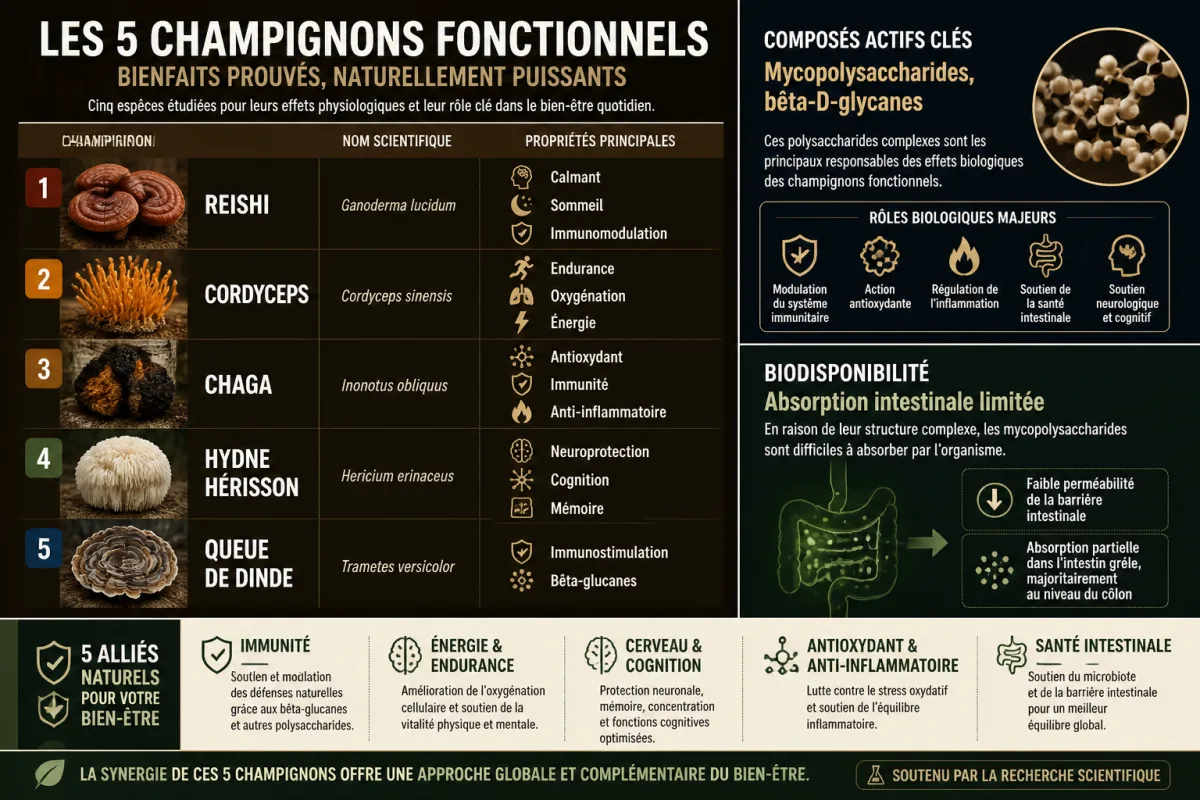
Main mushrooms and mechanisms of action
Reishi, nicknamed the “mushroom of immortality” in China, is recognized for its calming properties and its effect on sleep quality. Cordyceps is traditionally used to improve physical endurance and cellular oxygenation. Lion’s mane is studied for its neuroprotective effects and its potential on cognition and memory.
The role of functional mushrooms in stress management mainly involves modulation of the immune system and reduction of chronic inflammation, often exacerbated by prolonged stress. They help create a physiological environment more resistant to external aggressions.
Modern consumption forms and limitations
Coffees enriched with adaptogenic mushrooms are marketed to improve general health, resistance to infections, and to fight stress and fatigue, but their clinical efficacy is not yet proven. The concentration of active ingredients in these beverages is often insufficient to produce the effects observed in clinical studies using standardized extracts.
It is important to distinguish concentrated mushroom extracts used in scientific studies from commercial powders or drinks whose beta-glucan content is variable and often unverified. For optimal efficacy, prioritize standardized extracts and galenic forms validated by clinical trials.
Comparison of rhodiola, ginseng, and functional mushrooms against stress: what does science say?
Given the diversity of available adaptogens, a structured comparison of rhodiola, ginseng, and functional mushrooms against stress helps understand the fundamental differences between these three families and choose the adaptogen best suited to one’s profile. Each adaptogen has a distinct mechanism of action, specific indications, and a variable level of scientific evidence.
| Criterion | Rhodiola rosea | Ginseng (Panax ginseng) | Functional mushrooms |
|---|---|---|---|
| Main mechanism | Serotonin/dopamine modulation, cortisol regulation | ATP stimulation, action on HPA axis, ginsenosides | Immunomodulation via beta-D-glucans, anti-inflammatory |
| Main indication | Mental fatigue, chronic stress, concentration | Physical fatigue, tone, cognitive performance | Immune support, overall balance, sleep |
| Time of intake | Morning or early afternoon | Morning only (avoid evening) | Variable: reishi in the evening, cordyceps in the morning |
| Level of evidence | Strong clinical studies, multiple randomized trials | Numerous studies, variable results depending on extracts | Preliminary studies, lack of robust clinical trials |
| Side effects | Rare: mild agitation, headaches | Insomnia, hypertension, drug interactions | Generally well tolerated, possible allergies |
| Contraindications | Bipolar disorders, SSRI antidepressants, pregnancy | Hypertension, heart disorders, anticoagulants | Autoimmunity, immunosuppressants, fungal allergies |
The analysis of scientific evidence reveals that rhodiola has the highest level of validation for indications related to mental stress and cognitive fatigue. Ginseng shows promising results for physical fatigue and general tone, but with significant variations depending on the quality of the extracts used. Functional mushrooms, although traditional, still lack rigorous comparative clinical studies to confirm their effectiveness in stress management in humans.
The choice of an adaptogen should not be made randomly: each plant has specific actions that must correspond to the type of fatigue, individual metabolism, and the life context of each person.
Adaptogenic mushrooms are said to have positive effects on aging, concentration disorders, and memory according to advertising claims, but these assertions remain to be confirmed by convincing clinical studies. Caution is therefore advised regarding marketing promises not supported by solid scientific data.
How to choose your adaptogen according to your profile?
The choice of an adaptogen depends on the type of fatigue and individual metabolism, each plant having specific actions. To make an informed choice, it is essential to identify the nature of your stress, your dominant symptoms, and any possible medical contraindications.
Selection criteria by type of stress
- Mental stress and burnout: Rhodiola rosea is the most suitable due to its action on concentration, mental clarity, and anxiety regulation without excessive stimulation.
- Physical fatigue and lack of tone: Standardized red ginseng offers lasting energy support, provided it is taken in the morning and associations with caffeine are avoided.
- Chronic stress with sleep disorders: Ashwagandha and reishi are favored for their calming properties and their effect on sleep quality.
- Immune support and prevention: Functional mushrooms (reishi, chaga, turkey tail) modulate immunity and provide complementary support for prolonged stress.
Dosage and possible combinations
The recommended duration of use for adaptogens is 6 to 12 weeks, followed by a 2 to 4 week break to avoid tolerance and allow the body to regain its natural balance. Dosages vary according to extracts: 200 to 600 mg for rhodiola, 100 to 400 mg for red ginseng standardized in ginsenosides, and 500 to 1,500 mg for functional mushroom extracts.
Combinations of adaptogens are possible but must be supervised. Combining rhodiola and ashwagandha can offer a balance between mental stimulation and relaxation, while ginseng and functional mushrooms can complement energy and immunity. However, it is not recommended to combine multiple stimulants (ginseng + caffeine + rhodiola) due to the risk of nervous overexcitement and sleep disorders.
Sensitive populations (pregnant or breastfeeding women, people under medication, patients with autoimmune diseases or psychiatric disorders) should consult a healthcare professional before using adaptogens. Drug interactions, particularly with antidepressants, anticoagulants, and immunosuppressants, are documented and require medical monitoring.
Perspectives and Innovations in the Field of Adaptogens
The adaptogen market is experiencing rapid growth, driven by increasing interest in natural wellness solutions and the search for alternatives to anxiolytic and stimulant medications. Mushroom coffees represent an emerging trend, but their real effectiveness remains to be demonstrated by independent clinical studies.
Current innovations focus on improving the bioavailability of active ingredients, notably through advanced extraction technologies and liposomal formulations. Synergies between adaptogens, combining plants and mushrooms in multi-target formulas, also constitute a promising development avenue, although requiring rigorous clinical validations.
Research needs remain significant, particularly for functional mushrooms whose mechanisms of action and optimal dosages are not yet fully elucidated. Direct comparative studies between rhodiola, ginseng, and adaptogenic mushrooms are sorely lacking, limiting healthcare professionals’ ability to formulate precise recommendations.
The role of adaptogens in a comprehensive mental health approach is undeniable, but they do not replace therapeutic support in cases of severe anxiety disorders or diagnosed depression. They are rather complementary tools within an integrative strategy including lifestyle hygiene, stress management, and appropriate medical follow-up.
Conclusion
This comparison of rhodiola, ginseng, and functional mushrooms against stress highlights distinct and complementary action profiles. Rhodiola excels in managing mental stress and cognitive fatigue, ginseng provides energetic and tonic support, while functional mushrooms modulate immunity and promote overall balance. Their effectiveness depends on the individual profile, type of stress, and forms of consumption used.
The choice of an adaptogen must be personalized and informed, taking into account available scientific evidence, potential contraindications, and drug interactions. Prefer standardized and titrated extracts, respect recommended dosages, and do not hesitate to consult a healthcare professional before prolonged use, especially in cases of underlying pathologies or ongoing treatments.
Natural adaptogens are not miracle solutions but valuable allies when used thoughtfully and adapted to each situation. In a world where chronic stress is omnipresent, they offer a complementary path to regain balance and resilience, provided they are integrated into a comprehensive health and wellness approach.
Key Takeaways
🌿 Rhodiola rosea is the most scientifically validated adaptogen for mental stress and cognitive fatigue.
⚡ Standardized red ginseng tones and stimulates physical energy but should be taken exclusively in the morning.
🍄 Functional mushrooms modulate immunity but still lack robust clinical studies.
🎯 The choice of adaptogen depends on the type of stress, individual profile, and medical contraindications.
⚠️ Mushroom coffees are trendy but their clinical effectiveness is not yet proven.
FAQ
Which adaptogen to choose for stress and anxiety?
For stress and anxiety, rhodiola rosea and ashwagandha are the most recommended. Rhodiola acts on concentration and mental endurance, while ashwagandha promotes relaxation and improves sleep quality. The choice depends on your profile: gentle mental stimulation or deep calming.

Can rhodiola and ginseng be combined?
The combination of rhodiola and ginseng is possible but should be supervised. These two adaptogens have stimulating effects that can add up and cause agitation or insomnia. It is preferable to alternate them or take them at different times of the day, and to avoid any combination with caffeine.
Are adaptogenic mushrooms effective against stress?
Functional mushrooms like reishi and cordyceps have immunomodulatory and anti-inflammatory properties that support the body against chronic stress. However, their direct clinical effectiveness against stress still lacks rigorous studies. Prefer standardized extracts rather than powders or commercial drinks.
How long should an adaptogen be taken to see effects?
Most adaptogens require 4 to 8 weeks of regular use to produce significant effects. Their action is progressive and cumulative. It is recommended to follow courses of 6 to 12 weeks, followed by a break of 2 to 4 weeks to avoid tolerance and preserve treatment effectiveness.
Do adaptogens have side effects or contraindications?
Adaptogens are generally well tolerated but have specific contraindications. Ginseng is not recommended in cases of hypertension or anticoagulant treatment. Rhodiola is incompatible with SSRI antidepressants. Functional mushrooms may interfere with immunosuppressants. Always consult a healthcare professional before use.
