
Sommaire
Food Poisoning Symptoms in 2026: Recognize the Signs, Act Quickly, and Know When to Consult
Food poisoning symptoms most often include nausea, vomiting, diarrhea, abdominal cramps, and sometimes fever. A mild form may improve within a few days, but dehydration, blood in the stool, neurological disorders, or severe pain require prompt medical advice.
The onset time varies depending on the food, toxin, or microorganism involved: symptoms can appear within hours, but also after several days. This timeline, the number of sick people, and the general condition help distinguish a probably benign situation from a problem requiring consultation.
In Brief
🔎 The most common signs are diarrhea, nausea, vomiting, and abdominal pain or cramps.
💧 The priority is hydration: small repeated sips can reduce the risk of dehydration when vomiting decreases.
🚨 Blood in the stool, confusion, severe weakness, difficulty breathing, or inability to drink justify urgent medical assistance.
👶 Infants, young children, pregnant women, elderly, and immunocompromised individuals should seek advice earlier.
What is Food Poisoning?
Food poisoning is a digestive or general disorder caused by ingesting food or drink contaminated by a microorganism, toxin, or harmful substance. The term thus covers several situations, including certain food infections and poisonings due to toxins already present in the food.

The foods or drinks involved may have been contaminated during preparation, storage, cooking, or transport. Contamination can also affect several people who shared the same meal, although this circumstance alone does not confirm the cause.
Food poisoning is not recognized solely by the consumed food: symptom progression and general condition matter more.
What Are the Most Common Food Poisoning Symptoms?
The most common food poisoning symptoms are diarrhea, nausea, vomiting, and abdominal cramps. Fever, chills, headaches, or extreme fatigue may also appear, especially when an infection is involved.
Symptoms do not necessarily all occur together. One person may mainly have vomiting, while another mainly experiences diarrhea and stomach pain. The absence of fever does not exclude a food origin, nor does the presence of fever alone allow for a diagnosis.
Digestive Signs to Watch For
- Nausea and a feeling of stomach upset;
- Vomiting, sometimes repeated;
- Diarrhea, watery or very frequent;
- Abdominal cramps or stomach pain;
- Bloating and temporary loss of appetite.
Diarrhea and vomiting cause loss of water as well as minerals. A dry mouth, infrequent or dark urine, dizziness when standing, unusual drowsiness, or marked weakness may indicate dehydration, which is particularly concerning in children and the elderly.
Possible General Signs
Food poisoning can cause fever, chills, headaches, muscle aches, or general malaise. High, persistent fever or fever associated with blood in the stool warrants medical advice, as it may accompany an infection requiring clinical evaluation.
Neurological symptoms are unusual but serious. Blurred or double vision, difficulty speaking or swallowing, progressive muscle weakness, paralysis, or difficulty breathing after consuming a suspicious food should prompt immediate emergency services contact, notably 15 in France or 112 in Europe.
When do symptoms become worrying?
Very intense abdominal pain, localized or worsening, should not automatically be attributed to food poisoning. Abdominal pain can also correspond to appendicitis, an obstruction, inflammation of the gallbladder, or another medical emergency.
A rapidly deteriorating general condition is a warning sign, even if the diarrhea seems mild. Confusion, loss of consciousness, difficulty breathing, convulsions, very cold skin, or inability to stay awake require urgent care.
How long does it take for symptoms to appear?
Symptoms of food poisoning can begin a few hours after the meal, but some foodborne infections only appear after one or more days. The delay depends on the cause and therefore does not alone allow identification of the responsible food.
A meal consumed just before vomiting is not necessarily the source of the problem. Several meals and drinks taken in the previous days may be involved, especially when the infectious agent has a longer incubation period.
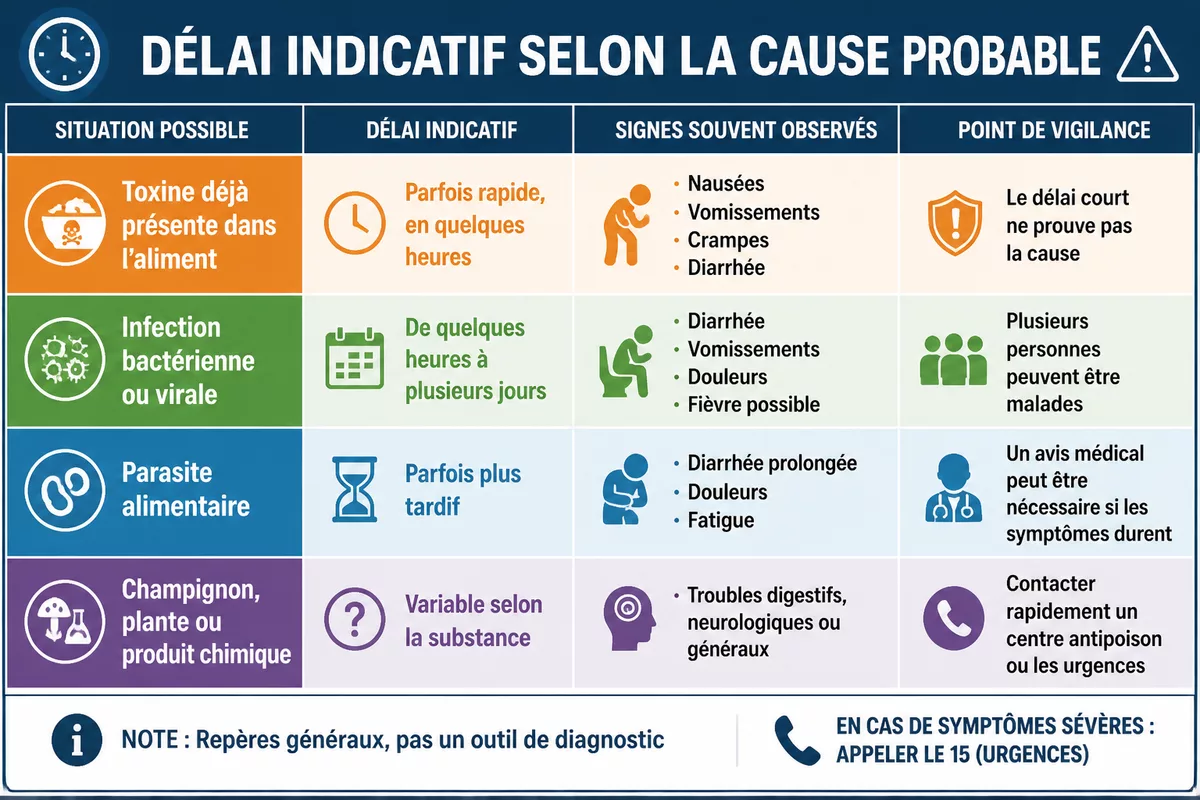
Delay according to the probable cause
| Possible situation | Indicative delay | Commonly observed signs | Point of caution |
|---|---|---|---|
| Toxin already present in the food | Sometimes rapid, within a few hours | Nausea, vomiting, cramps, diarrhea | Short delay does not prove the cause |
| Bacterial or viral infection | From a few hours to several days | Diarrhea, vomiting, pain, possible fever | Several people may be ill |
| Food parasite | Sometimes later | Prolonged diarrhea, pain, fatigue | Medical advice may be necessary if symptoms persist |
| Mushroom, plant, or chemical product | Variable depending on the substance | Digestive, neurological, or general disorders | Contact a poison control center or emergency services quickly |
This table provides general guidelines and not a diagnostic tool. Public health data and medical recommendations may evolve; the World Health Organization, Public Health France, and local health authorities remain the references for general information on infections and food poisoning.
How long does food poisoning last?
A mild form often improves within a few days, but the duration varies depending on the cause, age, and health status. Vomiting may stop before diarrhea, while fatigue or disturbed bowel movements can persist after the most intense symptoms disappear.
Diarrhea that does not improve, reappears after improvement, or is accompanied by fever, blood, or dehydration should be evaluated by a professional. The absence of improvement matters more than a fixed number of days applicable to everyone.
What to do in case of food poisoning?
In case of moderate symptoms, the immediate course of action is to rest, monitor the progression, and drink regularly in small amounts. Rehydration becomes a priority when diarrhea or vomiting is repeated, as fluid loss can accelerate within a few hours.
An oral rehydration solution can be requested from a pharmacist, especially for a child or a vulnerable person. Recommendations from the Health Insurance and health authorities favor an evaluation adapted to the profile rather than systematic self-medication.
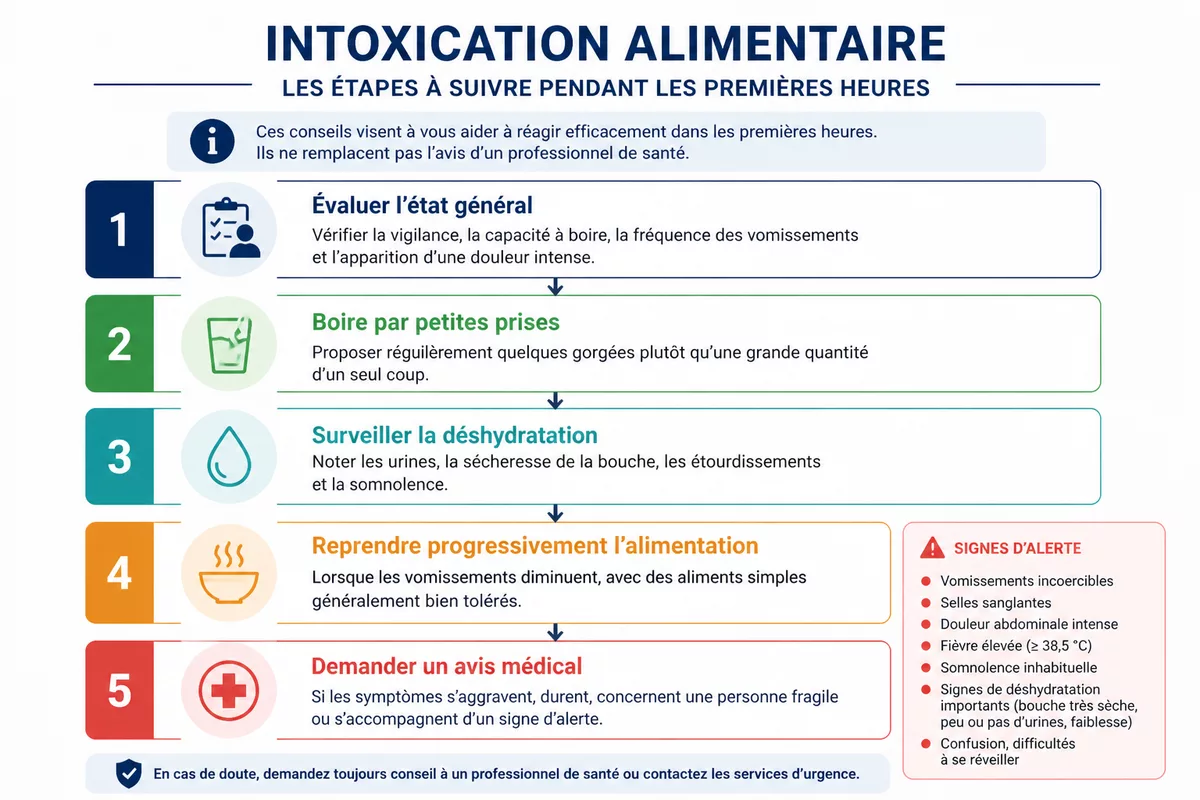
How to act during the first hours: the steps
- Assess the general condition: check alertness, ability to drink, frequency of vomiting, and the onset of severe pain.
- Drink in small sips: regularly offer a few sips rather than a large amount at once.
- Monitor dehydration: note urination, dry mouth, dizziness, and drowsiness.
- Gradually resume eating when vomiting decreases, with simple foods that are generally well tolerated.
- Seek medical advice if symptoms worsen, persist, affect a vulnerable person, or are accompanied by a warning sign.
Which foods to prioritize and which to avoid?
Resuming eating can be gradual when vomiting subsides. Simple foods, in small portions, are often easier to tolerate than a heavy meal, but forcing eating is not helpful during significant nausea.
- Temporarily avoid alcohol and very fatty or very spicy meals;
- Limit raw or hard-to-digest foods if their consumption worsens symptoms;
- Do not consume a suspicious food, even if it seems to have a normal smell;
- Keep the packaging or a photo of the label if a health investigation becomes necessary.
Medications should not be used randomly. Transit slowers may be inappropriate in the presence of fever or blood in stools, while antibiotics do not treat all causes and require medical advice. No dosage or protocol can be recommended without knowing the age, medical history, and context.
Drinking a little and often is generally more realistic than trying to quickly replace all losses at once.
When should you consult quickly?
Medical advice should be sought quickly in case of blood in stools, high fever, severe abdominal pain, persistent vomiting, or signs of dehydration. An earlier consultation is also necessary for infants, young children, pregnant women, elderly people, and immunocompromised individuals.
A consultation allows searching for another cause, assessing hydration, and deciding if tests are necessary. A doctor can also determine if stool analysis, special monitoring, or reporting a collective episode should be considered.
Warning signs that require medical advice
- Blood in stools or unusual black stools;
- Repeated vomiting preventing retention of liquids;
- Heavy, persistent diarrhea or diarrhea associated with high fever;
- Very severe abdominal pain, localized or increasing;
- Very dry mouth, absence or significant decrease in urination, dizziness, or drowsiness;
- Confusion, malaise, loss of consciousness, seizures, or unusual weakness;
- Blurred vision, difficulty speaking, swallowing, or breathing;
- Symptoms after ingestion of wild mushrooms, unknown plants, or a chemical product.
Which profiles should consult earlier?
Infants and young children can dehydrate quickly because their water reserves are limited. Pregnant women, elderly people, immunocompromised individuals, and patients with chronic illness should also seek advice earlier, even when symptoms seem moderate.
Ongoing treatment can modify the risk or management, especially in case of medication that promotes bleeding, immunosuppressive treatment, or kidney disease. The healthcare professional must know the treatments taken, allergies, and important medical history.
In which situations should you call emergency services?
Emergency services must be contacted immediately in case of difficulty breathing, neurological disorder, loss of consciousness, seizures, significant confusion, or signs of severe dehydration. In France, dialing 15 or 112 can direct you to the appropriate response; the local number should be used in other countries.
A possible ingestion of wild mushrooms, toxic plants, or household products also justifies quick contact with a poison control center or emergency services. Do not induce vomiting or give any “neutralizing” product without medical instruction. Information on precautions related to mushrooms is also covered in this article on contraindications of mushrooms, but a suspicion of acute poisoning primarily requires emergency services or a poison control center.
How to distinguish food poisoning from another digestive problem?
Food poisoning and gastroenteritis can produce the same symptoms, notably diarrhea, vomiting, and cramps. The context sometimes helps: several people falling ill after a shared meal points to a food source, while the spread of symptoms among acquaintances may suggest a viral infection, without allowing a definitive conclusion.
Food allergy rather causes itching, hives, swelling of the lips, or respiratory discomfort, sometimes with digestive troubles. Respiratory difficulty or swelling of the throat is an emergency, regardless of the presumed cause.
| Situation | Possible signs | Prudent conduct |
|---|---|---|
| Food poisoning or infection | Diarrhea, vomiting, cramps after a food or shared meal | Hydration and monitoring for warning signs |
| Viral gastroenteritis | Similar cases among acquaintances, diffuse digestive symptoms | Hand hygiene and medical advice if worsening |
| Food allergy | Hives, swelling, respiratory discomfort, malaise | Emergency if breathing or consciousness is threatened |
| Mushroom, plant, or chemical product | Digestive symptoms associated with neurological or unusual signs | Poison control center or emergency services without delay |
The diagnosis is not based solely on the list of symptoms. The doctor takes into account the delay, the foods consumed, travel, grouped cases, treatments, and clinical examination; tests may be proposed in certain situations.
What mistakes should be avoided after the first symptoms?
The most frequent mistakes concern hydration, self-medication, and interpretation of the delay. A person may too quickly attribute symptoms to the last meal, wait despite worsening, or take a medication that masks an important sign.
- Waiting despite inability to drink: the risk is rapid dehydration. Medical advice should be sought if fluids do not stay down.
- Taking an anti-diarrheal without advice: some contexts, notably fever or blood in stools, require prior evaluation.
- Consuming the suspected food again: a normal smell or taste does not guarantee the absence of contamination.
- Forgetting vulnerable people: an infant, a pregnant woman, or an immunocompromised person may require earlier advice.
- Inducing vomiting after an unknown substance: this practice can worsen injuries and should be avoided without instruction from a poison control center.
How to reduce the risk of a new food poisoning?
Prevention is based on hand hygiene, separation of raw and cooked foods, proper cooking, and maintaining the cold chain. A clean kitchen is not enough if a cooked food is then placed back into a container that previously held raw meat or eggs.
- Wash hands before cooking and after handling raw foods;
- Use separate utensils for raw and cooked foods;
- Follow storage instructions and the expiration date;
- Cool leftovers quickly and avoid consuming food that has been left at room temperature for a long time;
- Be especially careful with eggs, meats, fish, shellfish, and dairy products.
At a restaurant or while traveling, insufficient cooking, unsafe water, or a break in the cold chain can increase the risk. The World Health Organization recommends simple food safety principles: cleanliness, separation of raw and cooked, sufficient cooking, proper temperature storage, and use of safe water.

Key points
- 🔎 Symptoms often include diarrhea, nausea, vomiting, and abdominal cramps.
- 💧 Dehydration is the immediate risk to monitor after repeated losses.
- ⏱️ The onset time varies from a few hours to several days depending on the cause.
- 🚨 Blood, neurological disorders, and inability to drink require rapid medical assistance.
- 👶 Vulnerable individuals should consult sooner, even with moderate symptoms.
Frequently Asked Questions
How to know if it is food poisoning or gastroenteritis?
Both situations can cause diarrhea, vomiting, and abdominal pain. Several people falling ill after the same meal suggests a food origin, but only a professional can confirm the cause in situations that require it.

How long does it take for food poisoning symptoms to appear?
Symptoms can begin within a few hours or after several days. The delay depends on the toxin, microorganism, or substance involved and is not sufficient to identify the responsible food.
How long does food poisoning last?
A mild form often improves within a few days, but the duration varies depending on the cause and individual condition. Persistent diarrhea, worsening symptoms, or dehydration justify medical advice.
Should you consult a doctor at the first vomiting?
An isolated episode without other worrying signs does not always require immediate consultation in a healthy adult. Advice becomes necessary if vomiting repeats, prevents drinking, is accompanied by blood, severe pain, high fever, or concerns a vulnerable person.
What signs should prompt a quick emergency call?
Difficulty breathing, confusion, loss of consciousness, convulsions, paralysis, major weakness, or persistent inability to drink require urgent help. In France, 15 or 112 can be called; ingestion of mushrooms, plants, or chemicals also justifies contact with a poison control center.
