

| 🍄 | Definition: Asian medicinal mushroom (Grifola frondosa) rich in beta-glucans and active polysaccharides. |
| 📉 | Glycemic impact: Improves insulin sensitivity and modulates blood glucose absorption. |
| ⏱️ | Time to effect: Visible metabolic effects generally appear after several weeks of regular use. |
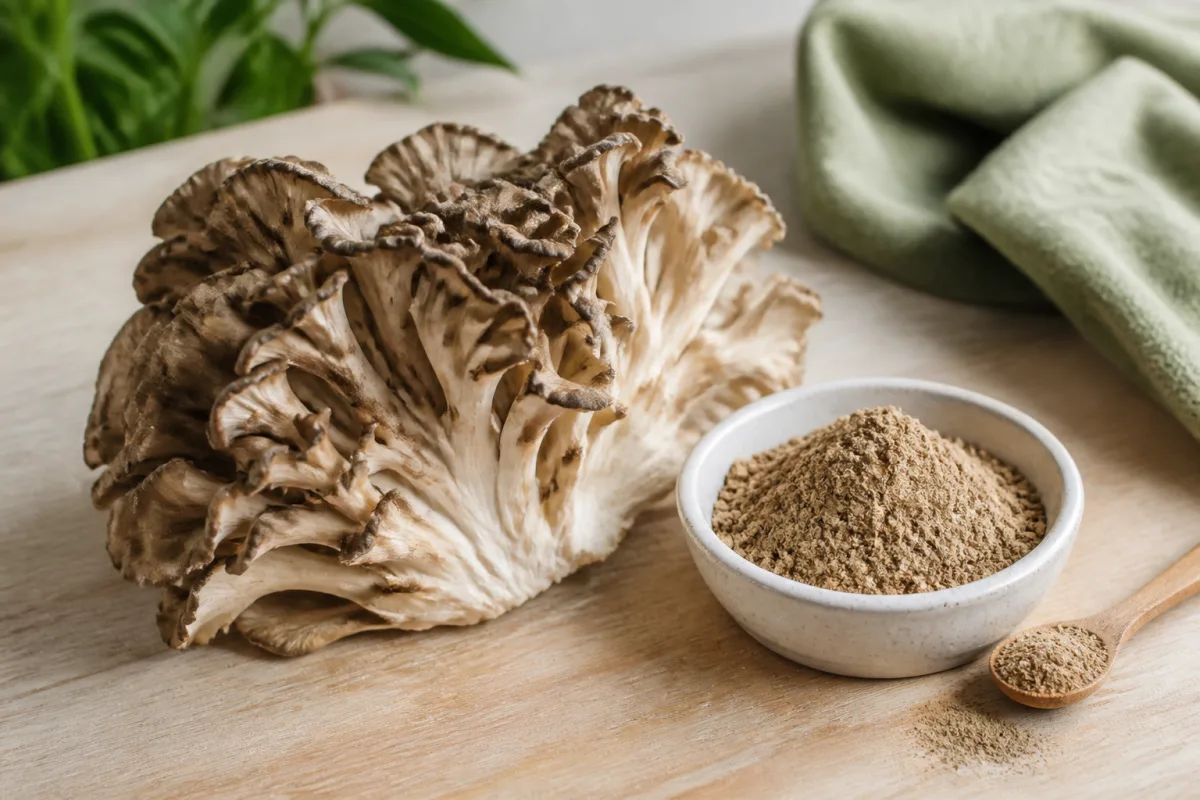
| 💊 | Forms of use: Consumable fresh, dried, powdered, or in standardized extract and capsule form. |
| ⚠️ | Precautions: Possible interaction with antidiabetic drugs; medical monitoring is essential if under treatment. |
| 🌿 | Traditional use: Used for centuries in Chinese and Japanese medicine for its adaptogenic properties. |
Sommaire
Maitake and blood sugar regulation: understanding the issues and how to integrate it daily
Maitake is a recognized metabolic supplement for its ability to naturally modulate insulin response and stabilize blood glucose levels. Thanks to its richness in beta-glucans and antioxidants, it supports pancreatic functions while strengthening physiological balance. This analysis of maitake, blood sugar regulation, and daily integration details mechanisms validated by research, the limits of current data, and safe usage protocols for optimal exploitation of its properties.
Maitake, a mushroom with multiple virtues
Origin and bioactive composition
Traditionally used in Chinese and Japanese medicine for centuries, maitake (Grifola frondosa) stands out for its dense nutritional matrix. Its composition is based on a complex network of proteins, dietary fibers, essential minerals (phosphorus, potassium, zinc, magnesium), and B vitamins, including B12. These elements form a synergistic ecosystem that goes beyond simple occasional supplementation to act deeply on cellular homeostasis. Polysaccharides and beta-glucans, particularly the D fraction, represent the pillars of its documented pharmacological activity.
Mechanisms of action on blood sugar regulation
The efficacy of maitake on carbohydrate metabolism is explained by a dual physiological action. On one hand, its bioactive compounds improve insulin sensitivity, thus facilitating glucose entry into muscle and liver cells. On the other hand, it exerts a protective effect on pancreatic beta cells, preserving their ability to secrete the hormone in a regulated manner. This modulation reduces the amplitude of postprandial glycemic spikes and limits vascular oxidative stress, an aggravating factor of long-term metabolic complications.
Key takeaways
- Richness in beta-glucans and B vitamins for targeted metabolic support.
- Synergistic action on insulin sensitivity and pancreatic protection.
- Antioxidant properties limiting oxidative stress in blood vessels.
How does maitake modulate blood sugar?
Maitake regulates blood sugar mainly by increasing tissue responsiveness to insulin and slowing intestinal sugar absorption. Its beta-glucans form a viscous gel that attenuates the glycemic rise after meals. At the same time, it activates cellular signaling pathways that promote glucose storage, thus reducing the overall glycemic load over several hours.
Preclinical research and initial clinical observations converge towards a notable dose-dependent effect. A study conducted on diabetic models demonstrated that a daily administration of 1g of maitake resulted in a significant reduction in blood glucose. Some analyses even suggest an increase in insulin sensitivity of up to 35%, although these data mostly come from animal studies or limited human trials. These results highlight the need to contextualize therapeutic promises while validating the real potential of the mushroom within a comprehensive metabolic strategy.
- Improvement of cellular glucose permeability via insulin receptors.
- Stimulation of NK cells and T lymphocytes, strengthening metabolic immunity.
- Adaptogenic effect helping the body manage physiological and hormonal stress.
- Endothelial protection limiting chronic inflammation related to sugar imbalances.
Critical analysis of scientific evidence
The scientific literature on maitake and diabetes is based on a growing body of in vitro and animal studies, supplemented by still limited clinical trials. The data consistently confirm the activity of polysaccharides on glycemic and lipid markers. However, the variability of extraction protocols, uneven standardization of dosages, and the limited duration of human follow-ups require a nuanced interpretation of the results. The maitake mushroom should not be seen as a miracle solution, but as a complementary lever whose effectiveness depends on the regularity and quality of the consumed product.
“Current data confirm a real metabolic action, but the transition to standardized clinical recommendations requires large-scale, long-term randomized trials on diverse human populations.”
Current methodological limitations notably concern the bioavailability of extracts and potential interactions with conventional treatments. Research still needs to clarify whether the observed effects on natural glycemic regulation persist after supplementation stops. Meanwhile, integrating maitake into a structured lifestyle remains the most coherent strategy to maximize its benefits without compromising therapeutic safety.
| Form of consumption | Concentration of active compounds | Absorption mode | Recommended use |
|---|---|---|---|
| Fresh/dried mushroom | Medium | Gradual (fibers) | Daily culinary integration |
| Fruit powder | Moderate | Rapid (digestion) | Smoothies, infusions, dishes |
| Standardized extract | High | Optimized | Targeted supplementation |
| Capsules/tablets | Very high | Controlled | Precise dosing, medical monitoring |
Key takeaways
- Strong evidence from animal models, human trials still limited in scope.
- Standardization of extracts essential to ensure reproducible dosing.
- Need for robust clinical trials to validate therapeutic protocols.
How to safely integrate maitake into daily life?
Successful integration relies on regularity, choosing a quality product, and adapting the dosage to your metabolic profile. Maitake can be consumed during meals or on an empty stomach, both methods ensuring effective absorption of polysaccharides. The key is to establish a stable routine over several weeks, as physiological changes and immune strengthening require cellular adaptation time.
To maximize results, it is advisable to favor standardized extracts or capsules when the goal is targeted glycemic action. Conversely, the fresh or dried food form proves ideal for overall nutritional support and harmonious culinary integration. Modern mycotherapy recommends starting with progressive doses to assess individual tolerance and adjust the protocol accordingly.
“Regularity takes precedence over quantity: a moderate but consistent intake over several months sustainably activates metabolic regulation pathways without saturating the body.”
Caution remains necessary regarding drug interactions. Maitake can enhance the effect of antidiabetic treatments, risking episodes of hypoglycemia if doses are not reassessed. Medical monitoring is therefore essential to adjust prescriptions and monitor biological markers. For children, pregnant women, or people on anticoagulants, prior approval by a healthcare professional is non-negotiable.
- Check the certification and traceability of the supplier to avoid contaminants.
- Prefer standardized extracts in beta-glucans for reliable metabolic action.
- Combine supplementation with a balanced diet and regular physical activity.
- Consult a doctor before starting if undergoing hypoglycemic or antihypertensive treatment.
Key points
- Regular intake over several weeks is essential to observe lasting effects.
- Standardized extracts are recommended for precise and reproducible dosing.
- Medical follow-up is mandatory to adjust concomitant antidiabetic treatments.
Conclusion
Maitake establishes itself as a credible metabolic ally, whose properties on glycemic regulation are based on documented physiological mechanisms. Although human research still needs to confirm the exact extent of its long-term benefits, its safety profile and richness in bioactive compounds make it a relevant option for people seeking to optimize their carbohydrate balance. Integration must remain gradual, supervised, and anchored in an overall healthy lifestyle, thus transforming this ancestral mushroom into a modern lever of preventive health.
To remember
- 🍄 Maitake beta-glucans sustainably improve insulin sensitivity.
- ⏳ Daily use over several weeks is necessary to stabilize blood sugar.
- 🔬 Scientific evidence is solid but still requires broader human trials.
- ⚕️ Medical monitoring is essential to avoid interactions with treatments.
- 🥗 Effectiveness is maximal when integrated into a balanced diet and lifestyle.
FAQ
How long does it take to feel the effects on blood sugar?
Initial metabolic adaptations may appear after a few weeks, but a notable stabilization of blood sugar generally requires several months of regular use. The response varies according to individual profile, chosen form of consumption, and product quality. It is recommended to maintain biological monitoring to objectify progress.

Can maitake replace an antidiabetic treatment?
No, maitake never substitutes a prescribed medical treatment. It acts as a supportive supplement that can potentiate the effect of medications, which requires strict monitoring to avoid hypoglycemia. Any dosage change must be validated by your attending physician or diabetologist.
What are the best forms for daily use?
Standardized extracts and capsules offer the best concentration/precision ratio to specifically target glycemic regulation. Powder and fresh mushroom are more suitable for a global nutritional and culinary approach. The choice depends on your therapeutic goals and digestive tolerance.
Are there any contraindications or known side effects?
Maitake is generally well tolerated but may cause mild digestive discomfort in case of initial overdose. It is not recommended for pregnant women, young children, and people on anticoagulants without medical advice. Increased vigilance is required for patients under hypoglycemic or antihypertensive treatment.
