

Sommaire
Food Poisoning Prevention: The Practical Guide to Avoiding Mistakes at Home and While Traveling
Preventing food poisoning relies on five habits: washing hands, separating raw from cooked foods, maintaining the cold chain, cooking food thoroughly, and quickly storing leftovers. These actions reduce the risk of contamination at home, at the office, during a picnic, or while traveling.
Food poisoning can cause digestive issues that are sometimes severe, especially in young children, pregnant women, the elderly, and immunocompromised individuals. This guide offers a practical method, mistakes to avoid, a checklist, and signs that should prompt seeking medical advice.
In Brief
🧼 Wash your hands before cooking, after handling raw foods, and after using the restroom.
❄️ Keep the refrigerator around 4 °C and promptly return cold-sensitive products.
🍗 Separate raw foods from cooked foods to limit cross-contamination.
🚑 Blood in stools, dehydration, persistent vomiting, or neurological signs warrant prompt medical consultation.
What is Food Poisoning and How Does It Occur?
Food poisoning is a disorder caused by ingesting food or drink contaminated by bacteria, viruses, parasites, or certain toxins. Contamination can occur during production, transport, preparation, storage, or serving of the meal.
Preventing food poisoning therefore involves interrupting the main contamination routes. A poorly washed hand, a cutting board used successively for raw chicken and vegetables, a dish cooled too slowly, or food left too long at room temperature can be enough to increase the risk.
The most common symptoms of food poisoning are diarrhea, nausea, vomiting, abdominal pain, and sometimes fever. The onset of symptoms depends on the causative agent: some disorders begin within a few hours, while others appear after several days.
The safety of a food cannot be judged solely by its smell or appearance: dangerous contamination can remain invisible.
Why is Prevention Important in Daily Life?
Most mistakes occur even before the meal reaches the plate. Breaking the cold chain, contact between raw and ready-to-eat foods, or delayed cooling of a dish create favorable conditions for the multiplication of certain infectious agents.
Prevention acts before symptoms appear, when a few simple actions can still interrupt contamination. Vigilance must be increased for ready-to-eat foods, as these products no longer benefit from subsequent cooking that can reduce some contaminants.
What are the main mistakes to avoid in the kitchen?
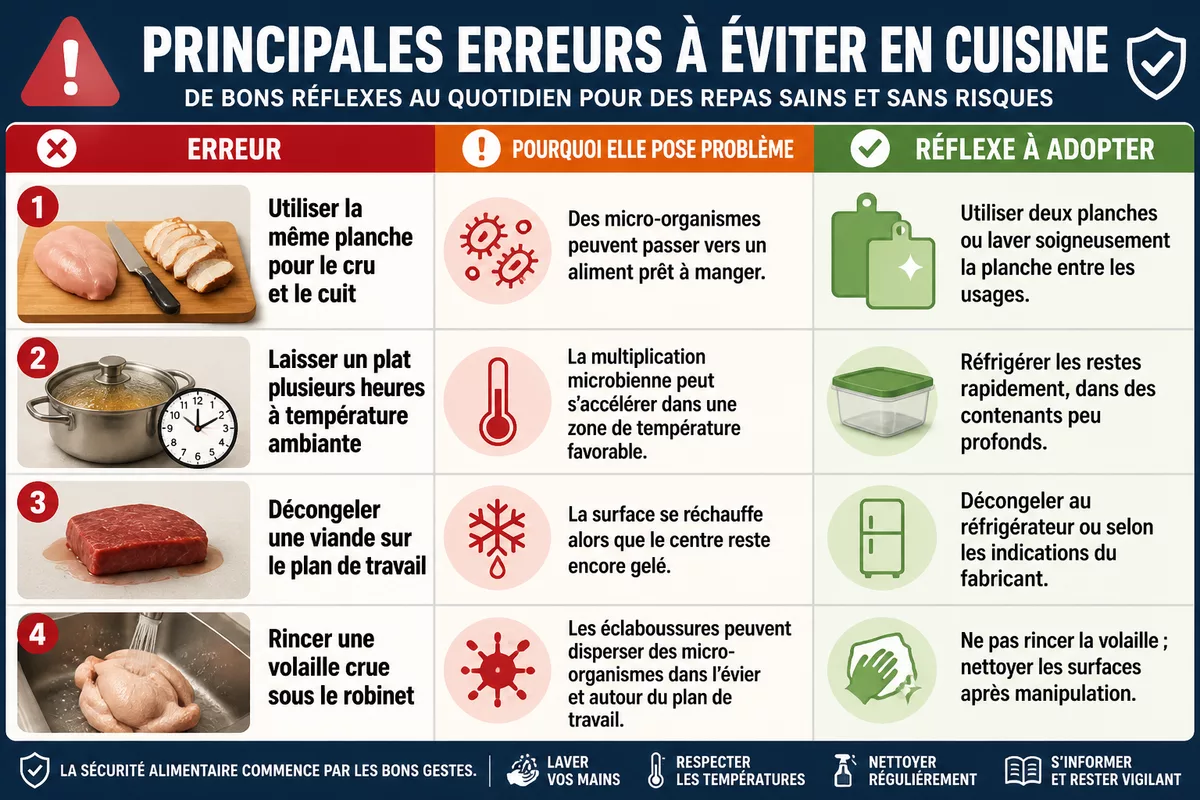
Domestic mistakes are not always spectacular. They often resemble practical habits: tasting a preparation with the same spoon, letting a large pot cool on the countertop, or placing raw meat packaging above a dessert in the refrigerator.
| Mistake | Why it is problematic | Reflex to adopt |
|---|---|---|
| Using the same cutting board for raw and cooked foods | Microorganisms can transfer to ready-to-eat food. | Use two cutting boards or wash the board thoroughly between uses. |
| Leaving a dish several hours at room temperature | Microbial multiplication can accelerate in a favorable temperature zone. | Refrigerate leftovers quickly, in shallow containers. |
| Thawing meat on the countertop | The surface warms up while the center remains frozen. | Thaw in the refrigerator or according to the manufacturer’s instructions. |
| Rinsing raw poultry under the tap | Splashes can spread microorganisms in the sink and around the countertop. | Do not rinse poultry; clean surfaces after handling. |
How to apply food poisoning prevention step by step?
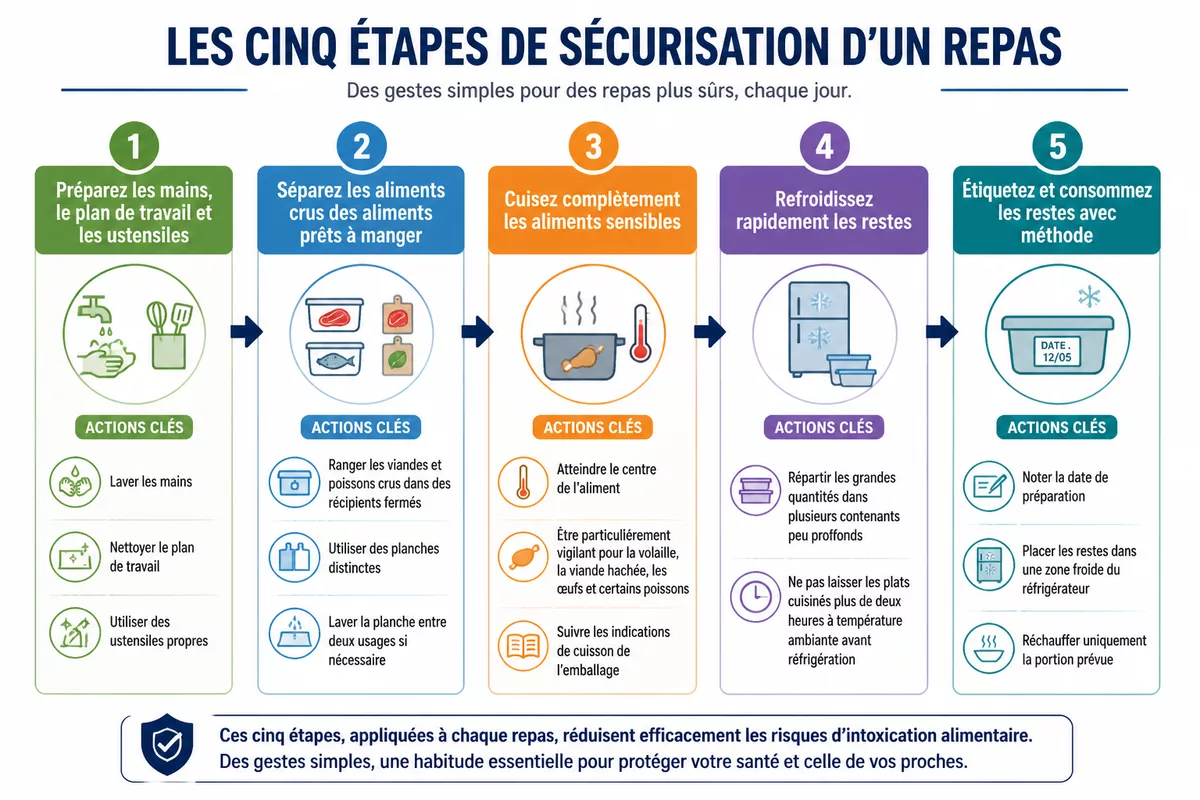
To secure a meal, start by organizing the kitchen before handling ingredients. The method below follows the actual order of execution: prepare, separate, cook, cool, then store. It is suitable for a family meal as well as for preparation intended for the next day’s lunch.
Step 1: prepare hands, countertop, and utensils
Wash your hands with water and soap before cooking, after using the toilet, after touching a trash bin, and after handling raw meat, fish, or eggs. Clean the countertop and use clean utensils.
Hand washing should also occur between two incompatible tasks. For example, a person who cracks eggs then cuts a tomato ready to be eaten must wash their hands before touching the tomato.
Expected result: hands and surfaces do not become a vector of transfer between ingredients.
Step 2: separate raw foods from ready-to-eat foods
Store raw meats and fish in closed containers, ideally in the lower part of the refrigerator. Keep salads, cut fruits, desserts, and cooked dishes away from raw products.
Assign one cutting board to vegetables and ready-to-eat foods, and another to raw meats or fish. If not possible, wash the board with hot water and dish soap between uses, then dry it.
- Place cooked foods in clean containers.
- Never put cooked food back on a plate that held raw food without prior washing.
- Use a clean spoon to taste a preparation.
Step 3: cook sensitive foods thoroughly
Cooking must reach the center of the food, especially for poultry, ground meat, egg-based preparations, and certain fish. A golden surface does not always guarantee that the inside is sufficiently cooked.
Follow the cooking instructions on the packaging when the product is packaged. For ground meat or thick poultry, check that the flesh is no longer raw in the center and that the juice running out is clear, without considering this indicator as a scientific measure.
Pregnant women, young children, elderly people, and immunocompromised individuals must be particularly cautious with raw or undercooked foods. The recommendations of the National Agency for Food, Environmental and Occupational Health Safety, Anses, should prevail for these groups.
Step 4: cool leftovers quickly
After the meal, divide a large quantity of food into several shallow containers. This arrangement speeds up cooling and prevents a pot from staying hot for a long time in the middle of the kitchen.
Anses recommends not leaving cooked dishes at room temperature for more than two hours before refrigerating them. This duration should be shortened when the ambient temperature is high, especially during travel or a summer day.
Step 5: label and consume leftovers methodically
Note the preparation date on the container and place leftovers in a cold area of the refrigerator. Leftovers should be consumed quickly, according to Anses recommendations and product instructions; in case of doubt about the duration or storage conditions, caution dictates not consuming them.
Reheat only the portion intended for the meal. Cooling followed by multiple successive reheatings complicates preservation control and increases handling.
Which foods require the most vigilance?
Risk foods are generally moist, nutrient-rich, and consumed without final cooking. Meats, fish, seafood, eggs, dairy products, cold preparations, and cooked dishes therefore require particular attention.
Contaminated foods do not necessarily have an abnormal smell, color, or taste. A normal appearance is not enough to validate the safety of a product stored under poor conditions.
Meats, poultry, fish, and eggs
Transport these products quickly after purchase and store them immediately in the refrigerator. Respect the dates indicated on the packaging and do not consume a product whose packaging is swollen, pierced, or abnormally soiled.
Preparations made with raw eggs, such as certain mousses, homemade mayonnaises, or uncooked doughs, are more sensitive. Vulnerable individuals should seek advice from a health professional or follow Anses recommendations before consuming them.
Dairy products and prepared dishes
Respect the cold chain for dairy products, cold cuts, composed salads, and prepared dishes. A product taken out of the refrigerator to be served must be returned to the cold quickly, especially when the room is warm.
Products past their expiration date should not be consumed on the grounds that they still seem fine. The date and storage conditions are complementary information to the product examination, not optional details.
Buffets, picnics, and take-away meals
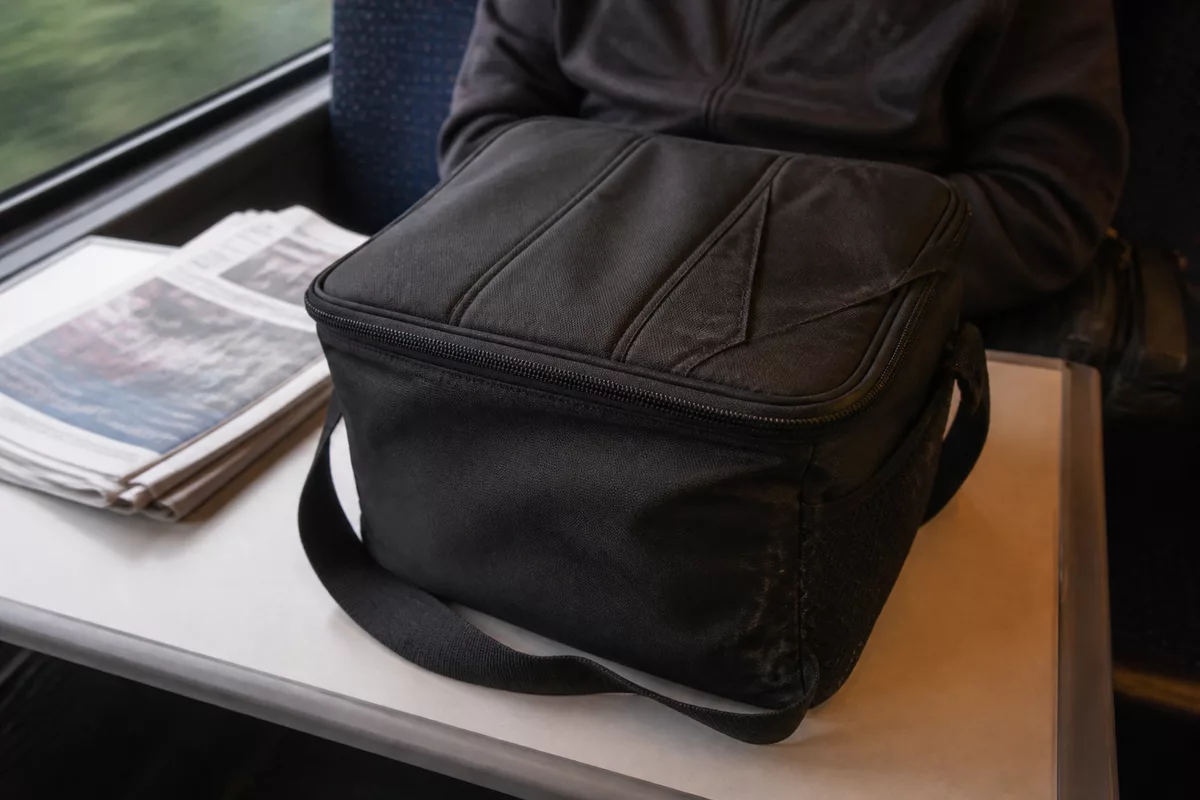
A buffet sometimes keeps foods for several hours outside the refrigerator. Prefer small quantities renewed regularly and use a cooler with cold accumulators for transported meals.
For a lunch at the office, pack the meal in a closed container and place it in the refrigerator upon arrival. A box kept all morning in a bag placed near a radiator does not offer the same guarantees as a meal kept cold.

How to preserve and transport food without breaking the cold chain?
The cold chain refers to the continuous maintenance of a food item at the intended temperature from purchase to consumption. For refrigerated products, Anses recommends a refrigerator set around 4 °C in its coldest zone, with regular thermometer checks.
The time spent out of the cold is just as important as the temperature displayed at the start. Food bought in a fresh store and then forgotten in a hot car can quickly lose its safety conditions, even if it was properly stored before purchase.
- Buy refrigerated and frozen products last.
- Use an insulated bag for a long trip.
- Do not refreeze thawed food, except after thorough cooking when the manufacturer’s recommendations allow it.
- Keep food in closed packaging to avoid leaks.
- Regularly clean the seals, shelves, and drawers of the refrigerator.
When traveling: adapt prevention to the context
When traveling, controlling water, ice, cooking, and storage can be more difficult. The World Health Organization’s advice is based on five principles: keep clean, separate raw from cooked, cook thoroughly, keep at the right temperature, and use safe water and raw materials.
Prefer foods served very hot when a reliable cold chain is not guaranteed. Avoid preparations left open, refrigerated products whose temperature seems uncertain, and water whose potability is not established.
When traveling, the useful question is not only “Does this food look good?”, but also “How was it prepared, stored, and served?”
What precautions should be taken for vulnerable people?
Children, pregnant women, the elderly, and immunocompromised individuals may have an increased risk of complications. Prevention must be stricter for raw foods, undercooked products, preparations made with raw eggs, certain fish, and products with uncertain storage conditions.
A person undergoing immunosuppressive treatment or suffering from a chronic illness should ask their doctor what dietary precautions correspond to their situation. General recommendations do not replace this individualized advice.
Caution also applies to mushrooms picked in the wild: uncertain identification can lead to severe poisoning, regardless of food hygiene rules. A guide on identifying mushrooms in the forest can help understand points of vigilance, but an online resource does not replace the advice of a poison control center or a competent professional in case of doubt.
Which symptoms should prompt a consultation?
Diarrhea or vomiting can remain mild, but some signs require a quick response. The approach depends on age, pregnancy, known illnesses, ongoing treatments, symptom intensity, and duration.
Contact a healthcare professional quickly in case of blood in stools, high or persistent fever, intense abdominal pain, repeated vomiting preventing drinking, signs of dehydration, or worsening symptoms.
Warning signs not to wait for
- Confusion, unusual drowsiness, malaise, or loss of consciousness.
- Difficulty breathing, swallowing, speaking, or the appearance of muscle weakness.
- Signs of dehydration: very low urine output, very dry mouth, severe dizziness, or inability to drink.
- Blood in stools or bloody vomiting.
- Very intense abdominal pain, hard abdomen, or rapid worsening of general condition.
- Symptoms in an infant, elderly person, pregnant woman, or immunocompromised person.
In the presence of breathing difficulties, neurological disorders, loss of consciousness, or severely altered general condition, immediately call local emergency services; 112 can be used in the European Union. In case of suspected poisoning by a product or mushroom, also contact a poison control center without waiting for worsening symptoms.
What to do in case of suspected food poisoning?
Note the time symptoms began, the foods consumed, the people who shared the meal, and the progression of the symptoms. This information can help the healthcare professional assess the situation, although it alone cannot establish a diagnosis.
Drink in small amounts if you can and avoid preparing meals for others during digestive symptoms. Do not take anti-diarrheal medication, antibiotics, or anti-vomiting treatment without medical advice, as treatment depends on the cause and the person’s profile.
If possible, keep the packaging, label, receipt, or a leftover portion of the suspected product in safe conditions. Do not taste a preserved food just to check if it is responsible.
Prevention of food poisoning: which method to choose depending on the situation?
The best method depends on the context. At home, controlling the refrigerator and utensils is a priority. When traveling, preservation, water, and cooking methods become more difficult to verify. For a vulnerable person, exclusion of certain risky foods may be recommended by a professional.
| Situation | Priority | Prudent decision |
|---|---|---|
| Home-cooked meal | Separate, cook, then cool quickly | Label leftovers and put them back in the refrigerator without delay |
| Lunch at the office | Keep the meal cold | Use an insulated bag then a refrigerator upon arrival |
| Picnic | Limit time out of the cold | Transport sensitive products in a cooler |
| Traveling in an area where water is uncertain | Control water, ice, and cooking | Choose safe water and well-cooked foods, served hot |
| Vulnerable person | Reduce exposure to raw or undercooked products | Request tailored recommendations from a healthcare professional |
What common mistakes compromise meal safety?
The most common pitfalls come from a false sense of security. A kitchen that looks clean, a food that smells good, or a reheated dish do not guarantee that all storage conditions have been respected.
Mistake 1: relying solely on smell
Some contaminants do not noticeably change the appearance, smell, or taste of a food. The date, temperature, and storage duration are therefore as important as visual inspection.
Mistake 2: letting a large pot cool for hours
A large quantity cools slowly in the center. Dividing the dish into several clean containers helps reduce its temperature more quickly.
Mistake 3: putting cooked food back on the plate of raw food
This habit can transfer microorganisms to food that will no longer be cooked. Prepare a clean plate for the cooked product.
Mistake 4: transporting a sensitive meal without an insulated bag
A car trip, a bag exposed to the sun, or a prolonged wait can break the cold chain. Use a cooler or choose a food that does not require refrigerated storage.
Mistake 5: minimizing symptoms in a vulnerable person
An infant, a pregnant woman, an elderly person, or an immunocompromised individual may require earlier medical advice. The absence of high fever is not enough to rule out a concerning situation.
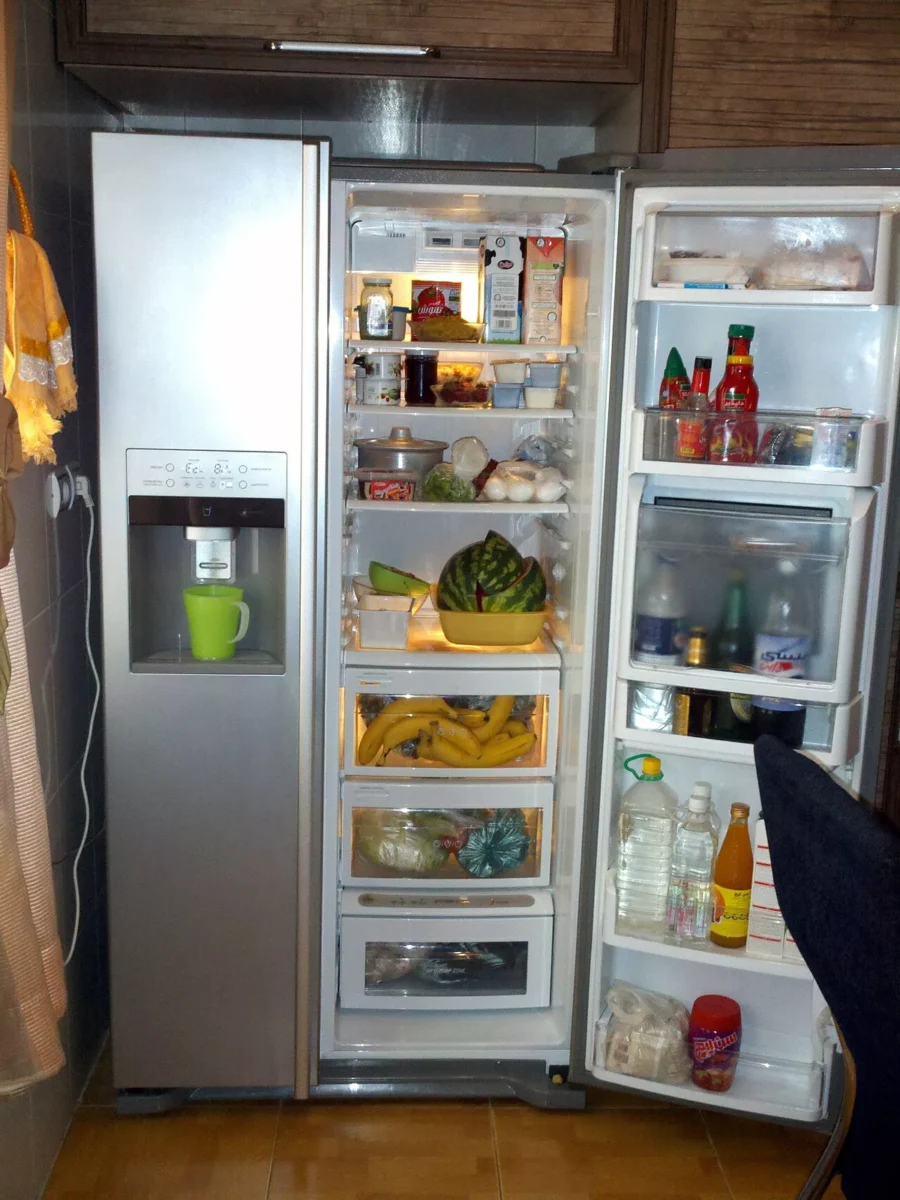
Prevention checklist to keep handy
This list allows you to quickly check the essential points before, during, and after meal preparation. It can be displayed near the refrigerator or used before going on a picnic.
- ☐ Hands are washed before preparation and after handling raw food.
- ☐ Cutting boards and utensils for raw food are separated from those for cooked food.
- ☐ Sensitive foods have remained cold during transport.
- ☐ Cooking reaches the center of meats, poultry, fish, or relevant preparations.
- ☐ Leftovers are distributed in clean, shallow containers.
- ☐ The preparation date is indicated on leftovers.
- ☐ Foods with expired dates or uncertain storage are discarded.
- ☐ Vulnerable people do not consume raw or undercooked foods without appropriate recommendations.
Key points to remember
- 🧼 Wash hands before each preparation and after each contact with raw food.
- ❄️ Maintain the cold chain and refrigerate leftovers quickly.
- 🔪 Separate utensils used for raw and cooked foods.
- 🍽️ Never judge the safety of a food by its appearance alone.
- 🚑 Seek medical advice quickly in case of severe symptoms or for vulnerable persons.
Frequently Asked Questions
Can food poisoning be avoided 100%?
No measure completely eliminates the risk, as contamination can occur before purchase. However, good hand hygiene, proper cooking, correct storage, and separation of raw and cooked foods greatly reduce avoidable errors.
Does a dangerous food always have a bad smell?
No. Some agents responsible for poisoning do not visibly change the food and do not necessarily produce a perceptible odor. Temperature, date, packaging, and storage duration must be taken into account.
How long can a dish stay out of the refrigerator?
Anses recommends not leaving a cooked dish more than two hours at room temperature before refrigerating it. In hot weather, caution requires reducing this time further and avoiding sensitive foods with uncertain storage.
What to do if several people get sick after the same meal?
Contact a healthcare professional and note the foods consumed, symptom onset times, and affected persons. Keep available packaging and receipts, without consuming a suspicious leftover for testing.
When should emergency services be called?
Call local emergency services in case of difficulty breathing, consciousness disorder, muscle weakness, severe dehydration, intense abdominal pain, or rapid worsening. The number 112 is accessible within the European Union.
